
How to Heal Your Gut for Clear Skin: A Complete Inside-Out Guide
This content was reviewed by Dr. Jil Busmann, PhD to ensure alignment with current nutrition science and evidence‑based education principles.
If you've been layering serums and switching cleansers without much change, part of the problem may sit below the surface. Research on the gut skin axis shows that your digestive system and your skin are in constant communication, so what happens in your gastrointestinal tract can shape the complexion you see in the mirror [1]. This guide walks you through how to heal your gut for clear skin, step by step.
Key Takeaways
A balanced gut microbiome helps regulate inflammation, supports hormonal balance, and helps you absorb essential nutrients. All three matter for clear, glowing skin.
Persistent acne (including hormonal acne), rosacea, eczema, and premature aging have been linked to poor gut health and gut dysbiosis, not just to what happens on the skin's surface.
The plan in this guide: remove triggers, rebuild a healthy gut with gut-friendly foods and targeted supplements, then lock in long-term habits like quality sleep and stress management.
Visible skin improvements may take 4 to 8 weeks after dietary changes, with deeper results building over 3–6 months of consistent effort.
The Gut-Skin Axis: The Link Between Gut Health and Your Skin
The gut skin axis is the two-way communication network between your digestive tract, your immune system, your hormones, and your skin [1]. When your gut microbiome is balanced, it helps keep systemic inflammation low and supports a strong skin barrier.
When that balance breaks down, dysbiosis can trigger systemic inflammation that affects skin health. A leaky gut (increased intestinal permeability) allows bacterial fragments such as lipopolysaccharide (LPS) to cross into the bloodstream. Those fragments send inflammatory signals that can show up as acne, redness, dull skin, and faster aging [1,2]. Research from the last decade has consistently linked gut imbalances with acne vulgaris, rosacea, eczema, and psoriasis [1].
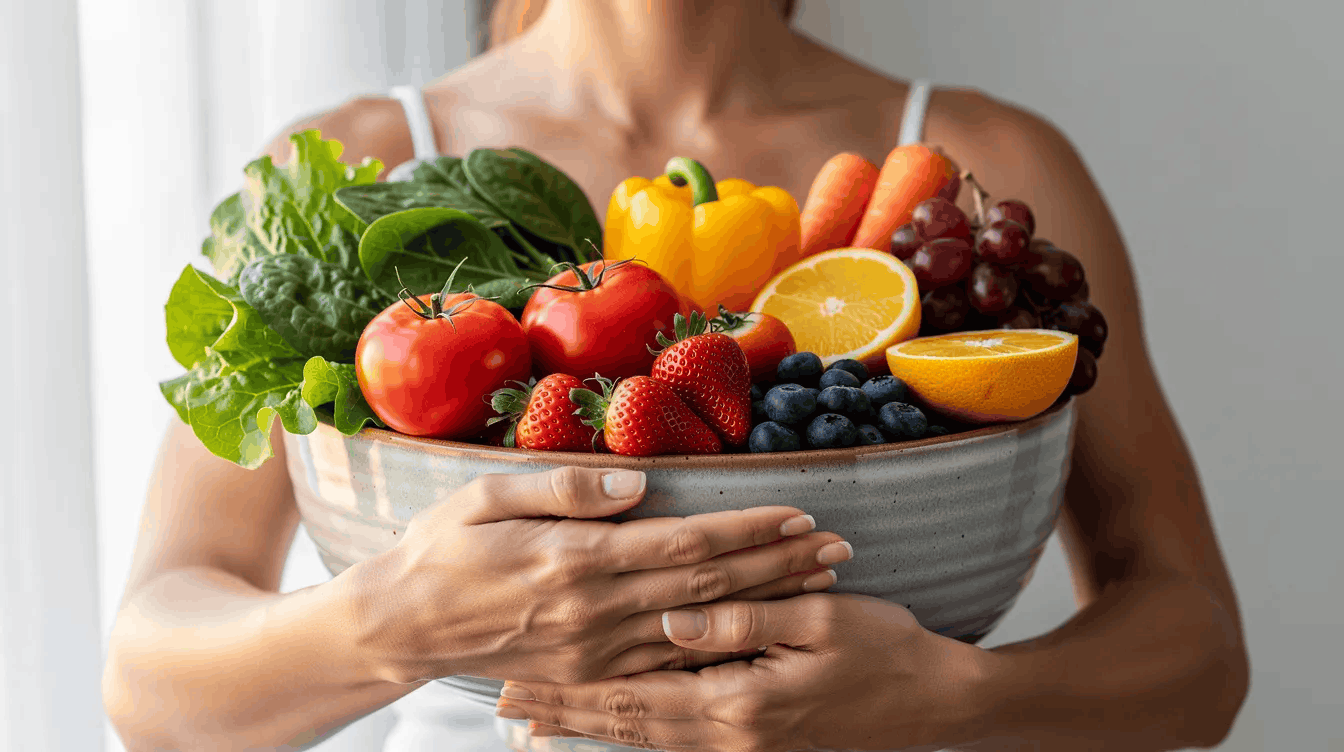
How Gut Health Affects Clear, Glowing Skin
Think of it like soil and plants. Poor soil grows weak, wilting plants no matter how much sun they get. In the same way, poor gut health can leave skin reactive and breakout-prone no matter how sophisticated your skincare routine is. The connection runs through three main pathways.
Systemic inflammation. When intestinal permeability increases, bacterial fragments enter the bloodstream and trigger immune responses throughout the body. The systemic inflammation that follows may contribute to skin inflammation, excess sebum production, and clogged pores. A diet heavy in ultra-processed foods may promote gut inflammation and make the cycle worse, and animal studies suggest a high-sugar diet does too [3].
Nutrient absorption. A healthy gut absorbs vitamin A, vitamin C, vitamin E, zinc, omega-3s, and protein. These are key nutrients for collagen synthesis, wound healing, and skin healing. Even a solid diet may fall short if your gut isn't absorbing those nutrients well.
Hormone regulation. Gut bacteria help metabolize estrogen. They reactivate estrogen in the gut so it can be reabsorbed into the bloodstream instead of leaving the body [4]. Beneficial gut bacteria also produce short chain fatty acids, which support the intestinal lining [1]. Disruption in the gut microbiota is tied to hormonal imbalances [4], which may contribute to hormonal acne along the jawline, chin, and neck.
Skin Problems Commonly Linked to Poor Gut Health
Many stubborn skin conditions have been linked to deeper gut imbalances. When topical treatments keep failing, it's worth looking inward.
Acne, Including Hormonal Acne. Acne affects up to 50 million Americans every year [5], and gut dysbiosis may play a bigger role than most people realize. In a 2026 study of 77 people with acne, blood levels of I-FABP, a marker of gut barrier damage, correlated strongly with acne severity (r ≈ 0.80) [6]. That shows a link, not that gut damage causes acne.
Diet matters too. In a large US study, women who drank two or more glasses of skim milk a day in high school were 44% more likely to have had acne as teenagers [7]. High-glycemic diets may make acne worse [8].
Rosacea. Several studies have found small intestinal bacterial overgrowth (SIBO) more often in people with rosacea. In one Italian study, 46% of rosacea patients had SIBO, compared with 5% of healthy controls. In the same study, patients whose SIBO was cleared with the antibiotic rifaximin saw their rosacea lesions disappear (20 of 28) or greatly improve (6 of 28) [9]. That's promising, but the dermatologists assessing the results knew who had been treated. Not every study agrees, and a 2021 review found the evidence linking rosacea to inflammatory bowel disease stronger than the evidence for SIBO [10].
Eczema and dermatitis. Leaky gut has been linked to skin inflammation and to inflammatory skin conditions like eczema. A 2025 study found that adults with atopic dermatitis had higher levels of gut barrier damage markers than healthy controls, and that several leaky gut biomarkers rose with disease severity [11].
Premature aging. Chronic low-grade gut inflammation may break down collagen and elastin over time, dulling skin tone and bringing on fine lines earlier than genetics alone would predict.
Skin Barrier issues. A weakened gut barrier may go hand in hand with a compromised skin barrier, causing dryness, sensitivity, and irritation even when you use gentle products.
Step 1: Spot the Signs of an Unhealthy Gut Behind Your Breakouts
Noticing gut symptoms can help you see your skin as part of a whole-body picture, not just clogged pores or "bad skin." If your digestive health is off, your overall skin health may reflect it.
None of these confirm a gut problem, but they're worth noting alongside your skin:
Chronic bloating, constipation, loose stools, or heartburn after common foods like wheat or dairy
Breakouts that seem to follow dairy
Bloating or breakouts in the days after high-sugar eating
Weekends of drinking followed by redness on the cheeks and nose
Track your symptoms for 2–4 weeks in a simple journal. Note what you eat, how your digestion feels, and what your skin does. Patterns often show up quickly and give you a clearer picture of how gut health affects your skin.
Step 2: Remove Foods and Habits That Work Against a Healthy Gut
Healing starts with removing what keeps irritating your gut lining and microbiome. Stacking supplements on top of inflammatory foods won't get you far. Avoiding overly processed foods can improve gut health [3].
Inflammatory foods to cut back on. Start with refined sugar, ultra-processed snacks, and sugary drinks [3].
A dairy trial. If your skin is prone to acne, try cutting back on milk for 4–6 weeks and see whether your breakouts change. The link between milk and acne comes from studies of what people remembered drinking, so a personal trial is the best way to find out whether it matters for you.
Alcohol. Drinking regularly, especially in larger amounts, disrupts gut bacteria, can increase intestinal permeability, and may make gut inflammation worse [12].
Unnecessary antibiotics. Antibiotics can cut gut microbiome diversity within days, and the gut doesn't always fully recover after repeated courses [13]. Don't skip antibiotics you need, but avoid unnecessary ones.
Start small. Pick one or two triggers, such as sugary drinks and dairy, and remove them for 30 days instead of overhauling everything overnight. Small, consistent changes beat dramatic diets that don't last.
Step 3: Eat for Gut Health and Radiant Skin
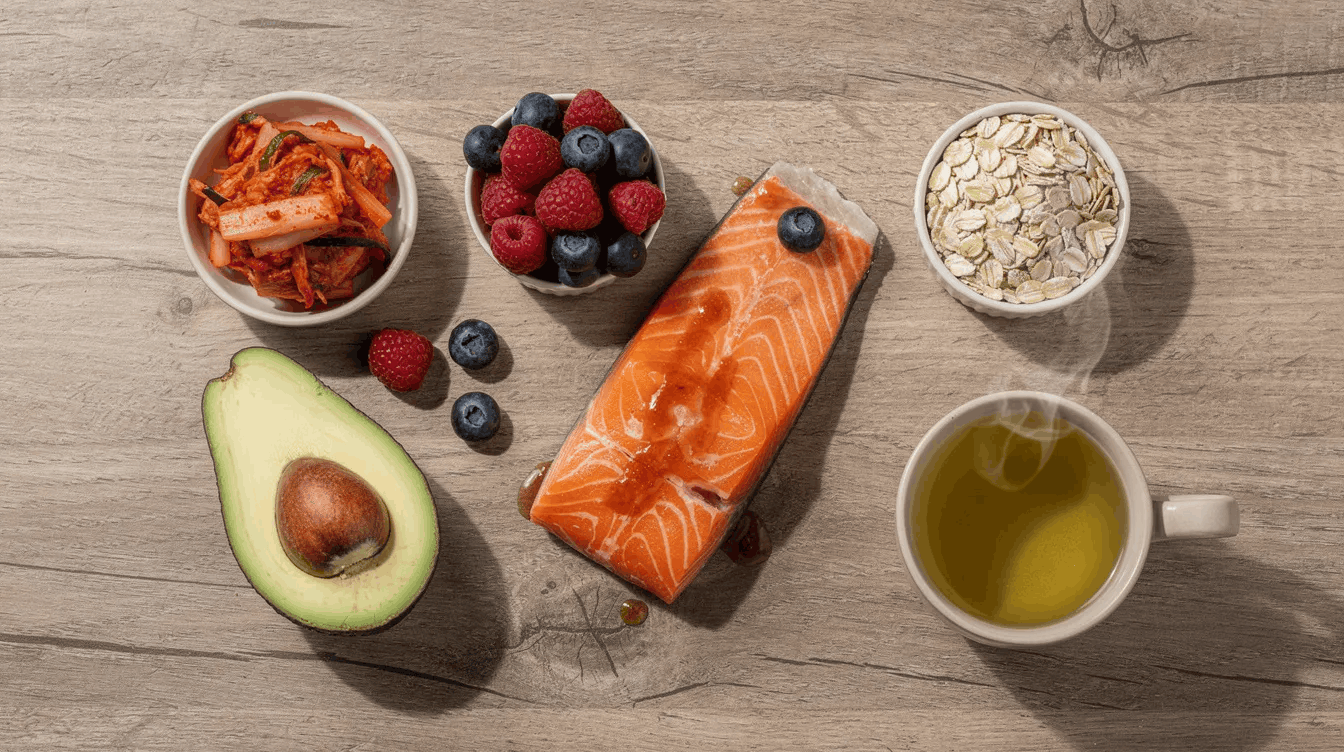
A gut-healing diet isn't about deprivation. It's about adding gut-friendly foods that support skin health and help you build a well balanced gut microbiome. Dietary variety supports a resilient gut microbiome, so aim for color and diversity on your plate.
Fiber (at least 25–29 grams daily). Vegetables, fruits, oats, legumes, and seeds contain prebiotic fibers that feed beneficial gut bacteria [1,14].
Fermented foods. Yogurt with live cultures, kefir, kimchi, sauerkraut, tempeh, and miso are probiotic rich foods that improve gut microbiome diversity [15]. Start with small daily servings to avoid bloating.
Skin-friendly fats. Extra virgin olive oil and avocado supply healthy fats, while walnuts and fatty fish like wild-caught salmon deliver omega-3s that help reduce inflammation and support the skin barrier.
Polyphenol-rich foods. Berries, green tea, cacao, herbs, and colorful vegetables are rich in polyphenols.
Hydration: Drinking more water can improve skin hydration, especially if you don't usually drink much [16].
In a year-long trial in older adults, a Mediterranean diet shifted the gut microbiome and slowed the loss of microbial diversity that comes with age [17]. Low-glycemic eating may help as well. In a 12-week trial of 43 young men with acne, total lesion counts fell by about 24 on a low-glycemic-load diet, compared with about 12 on a standard diet. The low-glycemic group also lost some weight, and the researchers couldn't separate the two effects [8].
Sample one-day gut-skin menu:
| Meal | What to Eat |
|---|---|
| Breakfast | Oatmeal with berries, ground flaxseed, and a dollop of kefir |
| Lunch | Grilled salmon over leafy greens with olive oil, avocado, and sauerkraut |
| Dinner | Lentil soup with turmeric, garlic, and roasted vegetables |
| Snack | Green tea with a handful of walnuts and dark chocolate |
Supplements for Gut Health and Glowing Skin
Supplements may help, but they work best on top of a gut-friendly diet and lifestyle. Think of them as boosters, not replacements.
Probiotic supplements. Most acne studies have tested Lactobacillus and Bifidobacterium species, sometimes in multi-strain blends [18]. A 2026 systematic review of 33 studies found that total acne lesion counts dropped by about 45% with probiotics, compared with about 37% in control groups, most of whom were also on standard acne treatment [18]. Overall, probiotics can reduce acne severity, though results for lesion counts are mixed [18,19]. The idea is not new: in a 1961 study with no control group, 80% of 300 people with acne improved after taking L. acidophilus and L. bulgaricus tablets, with the clearest benefit in inflammatory acne [2]. Probiotics may also help regulate inflammation linked to skin conditions [1].
Prebiotics. Gentle options include inulin, partially hydrolyzed guar gum, kiwi, and oats. If you have IBS or SIBO, introduce them slowly over 2–3 weeks.
Digestive enzymes. If you deal with bloating or see undigested food in your stool, broad-spectrum enzymes may help improve nutrient absorption.
Targeted micronutrients. Zinc, omega-3s, and vitamin D play roles in immune function and the health of the gut lining. Avoid megadoses unless testing shows you need them.
A note on safety. If you're pregnant, nursing, taking medication, or managing an autoimmune disease, talk with your clinician before starting any new supplement. The American Academy of Dermatology recommends getting nutrients from a well-balanced diet first, with supplements reserved for diagnosed deficiencies [20].
Stress, Sleep, and the Gut-Skin Connection
You know the pattern. A high-pressure work week hits, sleep drops, and suddenly your jawline erupts. Dermatologists first proposed a link between stress, the gut, and acne in 1930. Today researchers call it the gut brain skin axis [2].
Stress triggers cortisol release, which affects gut function. In one study, a stressful public-speaking task raised cortisol and made the small intestine more permeable [21]. Experimental studies suggest stress may also slow digestion and encourage bacterial overgrowth [2], and the gut brain axis signals back, creating a feedback loop. In a study of 144 medical students, those with higher stress scores tended to have more severe acne, though the link was modest [22]. Poor sleep is linked to lower gut microbiome diversity [23], which compounds the problem.
A few practical ways to manage stress:
Walk for 20–30 minutes a day
Do 5–10 minutes of deep breathing, such as box breathing or the 4-7-8 technique
Try yoga or journaling, and limit late-night screen time
Aim for 7–9 hours of sleep with a consistent bedtime, and skip caffeine after mid-afternoon

Building a Daily Routine for Better Gut Health
Consistency beats perfection. Small habits you can keep up will do more than a dramatic overhaul you drop after two weeks.
Morning. Drink a full glass of water before coffee. Eat a balanced breakfast with protein and fiber, then take five minutes for meditation or a walk in the sunlight.
Midday. Eat slowly and without rushing. Skip constant snacking so your digestive tract gets a break between meals. A short walk after lunch supports digestion and steadier blood sugar.
Evening. Eat a lighter, earlier dinner when you can. Turn screens off at least 30–60 minutes before bed. A calming routine makes it easier to get good sleep.
Pair inside and outside care. Gut-focused changes don't replace topical treatments, and some studies have tested topical probiotics for acne alongside standard care [18]. Choose gentle, non-comedogenic products that respect the skin barrier over harsh actives that strip it.
Give a gut-focused routine at least 8 weeks before judging results. Track the changes that matter: fewer breakouts, less redness, and more radiant skin. An unhealthy gut didn't develop overnight, and healing it takes patience.
When to See a Professional About Your Gut and Skin
Many people can improve their digestive health and skin at home, but some symptoms need individual medical support. See a professional if you have:
Severe cystic acne, widespread rashes, or rosacea that's getting worse quickly
Eczema that interferes with sleep or daily life
Persistent blood in your stool, unintentional weight loss, or abdominal pain at night
Gut health issues that last longer than 3 months despite consistent changes
A professional may order stool tests, SIBO breath testing, or hormone labs for androgen or insulin issues. It can help to see both a dermatologist and a nutrition-focused practitioner, so the skin and the gut both get attention.
This article is for education only and is not a substitute for personalized medical advice or diagnosis.

Frequently Asked Questions
How long does it take to see clearer skin once I start healing my gut?
Mild issues may improve within 4 to 8 weeks of dietary changes. Deeper problems like long-standing hormonal acne or chronic rosacea may take 3–6 months to improve substantially.
Can probiotics alone clear my acne?
Some people see improvement, and research shows modest gains in acne severity, but they're rarely a magic bullet on their own. They work best combined with dietary changes, stress management, good sleep, and a thoughtful skincare routine.
Is it possible to overdo fermented foods or prebiotics?
Yes. Ramping up fermented foods or prebiotic fiber quickly can cause gas, bloating, and discomfort, especially if you have irritable bowel syndrome or SIBO. Increase portions gradually over 2–3 weeks and scale back if symptoms flare.
Do I have to cut out all sugar forever for a healthy gut and better skin?
No. Focus on cutting back on added sugar and processed foods most of the time, and build your meals around whole, gut-friendly foods. Occasional treats are fine when your everyday diet supports a healthy gut.
What is the best first step if I feel overwhelmed?
Start with the basics. Keep a consistent sleep schedule, drink more water, add one extra serving of vegetables a day, and remove one major trigger like sugary drinks. Small wins add up to healthy skin and better digestive health over time.
Disclaimer
The information provided in this article is for educational and informational purposes only and is not intended as medical advice. While we work diligently to provide accurate and up-to-date information, we make no representations or warranties of any kind, express or implied, about the completeness, accuracy, reliability, suitability, or availability with respect to the content. The information contained herein should not be used as a substitute for the advice of an appropriately qualified and licensed physician or other healthcare provider. The suggestions and insights should not be used for diagnosing or treating a health problem or disease, or prescribing any medication. Always seek the advice of your physician or other qualified health provider with any questions you may have regarding a medical condition or treatment and before undertaking a new health care regimen. Never disregard professional medical advice or delay in seeking it because of something you have read on this site.
References
1. Mahmud MR et al., 2022. Impact of gut microbiome on skin health: gut-skin axis observed through the lenses of therapeutics and skin diseases. Gut Microbes. 2022;14(1):2096995.
2. Bowe WP, Logan AC, 2011. Acne vulgaris, probiotics and the gut-brain-skin axis: back to the future? Gut Pathog. 2011 Jan 31;3(1):1.
3. Zinöcker MK, Lindseth IA, 2018. The Western diet–microbiome-host interaction and its role in metabolic disease. Nutrients. 2018 Mar 17;10(3):365.
4. Baker JM et al., 2017. Estrogen–gut microbiome axis: physiological and clinical implications. Maturitas. 2017 Sep;103:45–53.
5. American Academy of Dermatology. Skin conditions by the numbers. AAD.org.
6. Aksoy Saraç G et al., 2026. Association between intestinal fatty acid–binding protein and acne severity: evidence for gut barrier dysfunction in acne vulgaris. Acta Dermatovenerol Alp Pannonica Adriat. 2026;35:73–76.
7. Adebamowo CA et al., 2005. High school dietary dairy intake and teenage acne. J Am Acad Dermatol. 2005 Feb;52(2):207–214.
8. Smith RN et al., 2007. A low-glycemic-load diet improves symptoms in acne vulgaris patients: a randomized controlled trial. Am J Clin Nutr. 2007 Jul;86(1):107–115.
9. Parodi A et al., 2008. Small intestinal bacterial overgrowth in rosacea: clinical effectiveness of its eradication. Clin Gastroenterol Hepatol. 2008 Jul;6(7):759–764.
10. Wang FY, Chi CC, 2021. Rosacea, germs, and bowels: a review on gastrointestinal comorbidities and gut–skin axis of rosacea. Adv Ther. 2021 Mar;38(3):1415–1424.
11. Blicharz L et al., 2025. Severity of atopic dermatitis is associated with gut-derived metabolites and leaky gut-related biomarkers. Sci Rep. 2025 Jul 18;15(1):26146.
12. Bishehsari F et al., 2017. Alcohol and gut-derived inflammation. Alcohol Res. 2017;38(2):163–171.
13. Dethlefsen L, Relman DA, 2011. Incomplete recovery and individualized responses of the human distal gut microbiota to repeated antibiotic perturbation. Proc Natl Acad Sci USA. 2011 Mar 15;108(Suppl 1):4554–4561.
14. Reynolds A et al., 2019. Carbohydrate quality and human health: a series of systematic reviews and meta-analyses. Lancet. 2019 Feb 2;393(10170):434–445.
15. Wastyk HC et al., 2021. Gut-microbiota-targeted diets modulate human immune status. Cell. 2021 Aug 5;184(16):4137–4153.e14.
16. Palma L et al., 2015. Dietary water affects human skin hydration and biomechanics. Clin Cosmet Investig Dermatol. 2015 Aug 3;8:413–421.
17. Ghosh TS et al., 2020. Mediterranean diet intervention alters the gut microbiome in older people reducing frailty and improving health status: the NU-AGE 1-year dietary intervention across five European countries. Gut. 2020 Jul;69(7):1218–1228.
18. Warp PV et al., 2026. Prebiotics, probiotics, and postbiotics for acne vulgaris: a systematic review. Dermatol Ther (Heidelb). 2026;16(3):1531–1550.
19. Julanon N et al., 2026. Role of probiotics in managing acne vulgaris: a systematic review and meta-analysis of clinical trials. J Cutan Med Surg. 2026;30(5):NP89–NP102.
20. American Academy of Dermatology. Should I take vitamins or supplements for my skin? AAD.org.
21. Vanuytsel T et al., 2014. Psychological stress and corticotropin-releasing hormone increase intestinal permeability in humans by a mast cell-dependent mechanism. Gut. 2014 Aug;63(8):1293–1299.
22. Zari S, Alrahmani D, 2017. The association between stress and acne among female medical students in Jeddah, Saudi Arabia. Clin Cosmet Investig Dermatol. 2017 Dec 5;10:503–506.
23. Smith RP et al., 2019. Gut microbiome diversity is associated with sleep physiology in humans. PLoS One. 2019 Oct 7;14(10):e0222394.
Lacticaseibacillus rhamnosus GG (GG, strain ATCC 53103) is a probiotic strain first isolated from the human gut in the 1980s and studied in people for more than 30 years. It is known for surviving stomach acid and bile on its way through the digestive tract.
QI L. rhamnosus delivers 10 billion CFU of GG in one daily capsule, paired with inulin (chicory root fiber).
*This product is only available for sale in the USA. The product is not available for sale in Canada.