
How Many Grams of Protein Do You Need Per Day? A Practical Guide
This content was reviewed by Dr. Jil Busmann, PhD to ensure alignment with current nutrition science and evidence‑based education principles.
Protein is a vital nutrient made of amino acids, often called the building blocks of the body, and includes nine essential amino acids that the body cannot produce and must obtain through dietary protein. The recommended dietary allowance (RDA) for protein intake for an average sedentary adult is 0.8 grams per kilogram of body weight, which translates to about 60 grams of protein per day for a person weighing 165 pounds (75 kilograms). (1)
For minimal/light activity, the recommendation is 1.0 gram of protein per kilogram of body weight. (1) Active individuals, including athletes, may require 1.2 to 2 grams of protein per kilogram of body weight per day, depending on their level of activity. (2)
Protein provides amino acids that help build and repair muscle, skin, hair, and other tissues, while also supporting muscle recovery, immune system function, and overall health. Animal-based protein sources include dairy products, eggs, fish, poultry, and red meat, while plant-based sources include beans, lentils, nuts, seeds, whole grains, and soy products.
This guide is for anyone interested that wants to consume protein to optimize their health, fitness, or nutrition by understanding how much protein they need each day. Knowing your daily protein needs can help you gain and maintain muscle mass, support recovery, and achieve your health or fitness goals.
Key Highlights
Daily protein needs vary by age, activity, and health status.
Sedentary adults typically need about 0.8 g/kg, while older and active adults may benefit from higher intakes.
Protein should account for 10–35% of daily calories.
Very high protein intake is mainly a concern for people with kidney disease.
Spreading protein intake through the day can support muscle maintenance and recovery.
Animal proteins are usually complete, and plant-based diets can still meet protein needs by eating a variety of protein sources.
A healthcare professional or dietitian can help personalize intake.
Quick Answer: How Many G Protein Per Day
Summary of Common Daily Protein Recommendations:
Sedentary adults: 0.8 grams per kilogram of body weight
Average sedentary man: ~56 grams per day
Average sedentary woman: ~46 grams per day
Sedentary individual weighing 150 lbs: ~54 grams per day
The amount of protein you need varies depending on factors such as age, activity level, health status, and goals including weight loss or muscle gain. Because exercise increases muscle breakdown and repair, active people usually need more protein than sedentary people to support muscle growth (up to 2 grams per kilogram of body weight per day). Even older adults (65 and over) may benefit from a higher protein intake of 1-1.2 grams of protein per kilogram of body weight per day because higher intakes help counter age‑related muscle loss, support immune function, and maintain strength and quality of life more effectively than the lower baseline intake. (3)
Calculate Protein Intake By Body Weight
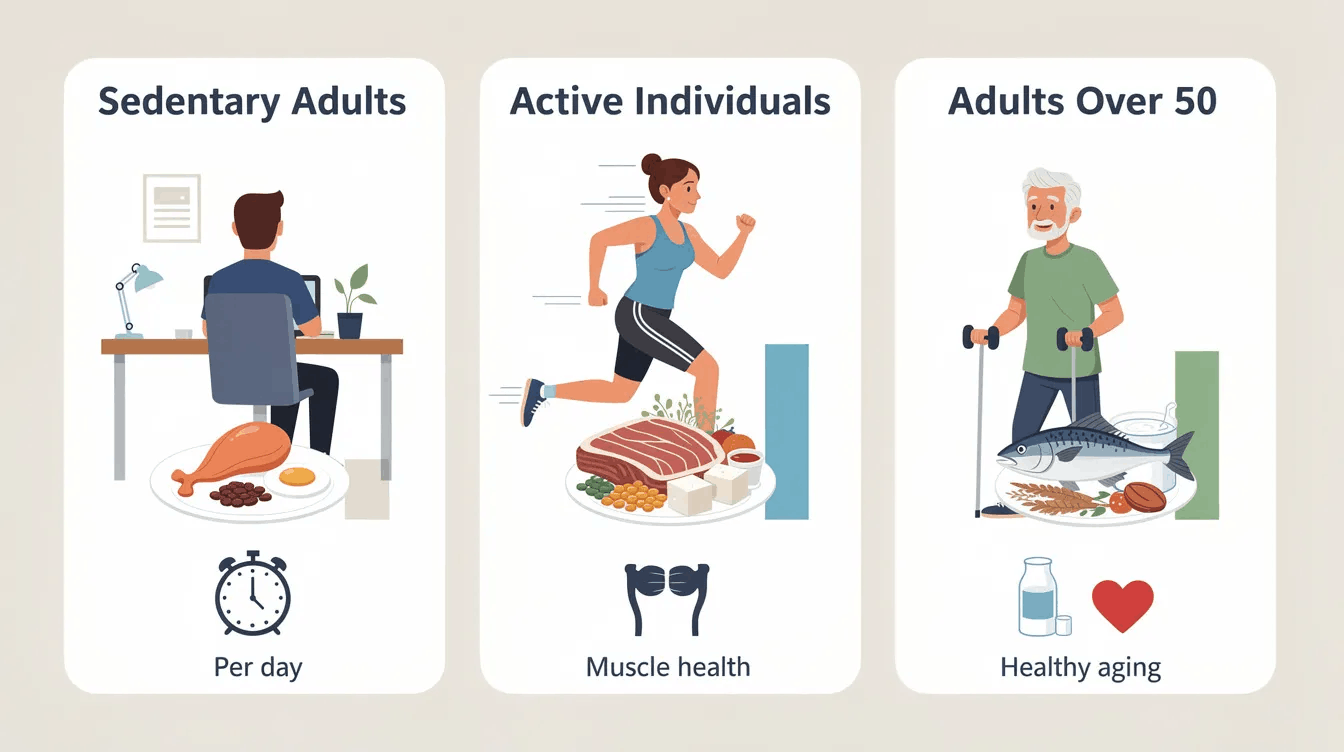
To calculate your protein needs, first convert your weight from pounds to kilograms by dividing by 2.2. Then multiply by the appropriate protein factor:
Sedentary adults: 0.8 g per kilogram of body weight
Active individuals: 1.2 to 2 g per kilogram
Older adults (65 and over): 1.0 to 1.2 g per kilogram
Daily Protein Intake and Grams Targets
Protein should make up about 10% to 35% of your daily energy intake. (4) This range is meant to support healthy individuals in maintaining muscle mass and give people enough protein to stay healthy without crowding out other nutrients or increasing long‑term disease risk, while still allowing flexibility for different eating patterns. Below is a guide to daily protein needs based on body weight, using a range of 0.8 to 2.0 grams per kilogram depending on activity level, age, and goals:
| Weight (lbs) | Protein Range (g/day) |
|---|---|
| 100 | 36 - 91 |
| 150 | 54 - 136 |
| 180 | 65 - 163 |
| 200 | 73 - 182 |
| Athletes and older adults often aim for the higher end of this range to support muscle mass and recovery. If you skip meals, it can be difficult to meet your protein needs and also reduce overall nutrient intake. | |
Adjust For Goals: Lose Weight or Gain Weight with More Protein
Protein for Weight Loss
Protein helps you lose weight in a healthier way by protecting lean mass while you lose fat. When people diet without paying attention to protein, up to a third of the weight they lose can come from muscle instead of fat, which can reduce strength and slow metabolism over time. (5)
Eating a little extra protein (up to 2 grams of protein per kilogram of bodyweight per day), especially alongside some resistance exercise, helps you feel fuller, makes it easier to stick with a calorie deficit, and reduces muscle loss during weight loss. (6) These benefits apply whether someone is losing weight through lifestyle changes alone or with weight loss medications, so it is still important to get enough protein during treatment. (6)
People with certain medical conditions, such as chronic kidney disease, may need to eat less protein than the recommended amount of 1.2 to 2 grams and should work with a healthcare provider or sports medicine expert to find the right amount for them. (7)
Consume Protein for Muscle Gain
Higher protein intake helps build muscle most effectively when it is combined with regular resistance or strength training, because exercise provides the growth stimulus and protein provides the building blocks for lean muscle mass. Aiming for slightly more than the basic recommendation (up to 2 g of protein per kilogram of body weight per day) within a controlled calorie intake can support muscle gain while limiting excess fat gain. (5) It is important to balance protein intake with overall calorie intake because too many extra calories can lead to unwanted weight gain.
How Much Protein Do I Need Throughout the Day
Distributing protein intake evenly across the day can help support muscle protein synthesis. For many adults, about 20 to 40 grams per meal is a useful target. (5)
Protein Snacks and Meal Timing
Including protein-rich snacks such as protein bars, hard boiled eggs, or protein shakes can help manage appetite and support steady energy levels throughout the day.
Animal Protein Versus Plant Alternatives: How to Get Complete Protein From Your Diet
Both animal and plant proteins can provide essential amino acids, but animal proteins are naturally "complete" proteins because they contain all nine essential amino acids in the right proportions for the body. They are also highly digestible, which makes them very efficient for maintaining and building muscle. (8)
Many single plant proteins are considered "incomplete proteins", like wheat or some pulses, because they are a bit lower in one or two essential amino acids and slightly less digestible. But this is easily fixed by combining different plant foods (for example eating beans with grains, or pea with rice proteins in a stir fry) so their amino acid profiles complement each other and together provide all the essentials your muscles need. (9)
In everyday terms, high-protein foods can include lean meats, fish, eggs, dairy, beans, lentils, tofu, tempeh, nuts, seeds, and grains and incorporating a variety of these foods can help meet protein needs effectively. Aiming for roughly 20–40 g of protein at each meal from a mix of these foods (for example, yogurt with nuts, a bean‑and‑grain bowl, or tofu with quinoa) will cover protein needs for most adults. Plant-based proteins are often higher in fiber and lower in saturated fat than many animal foods, making them a nutritious part of a balanced diet or vegetarian diet. For people managing calorie intake or saturated fat intake, low-fat dairy or plant-based alternatives may be preferable to full-fat dairy products. (8)
High Protein Foods And Typical Servings
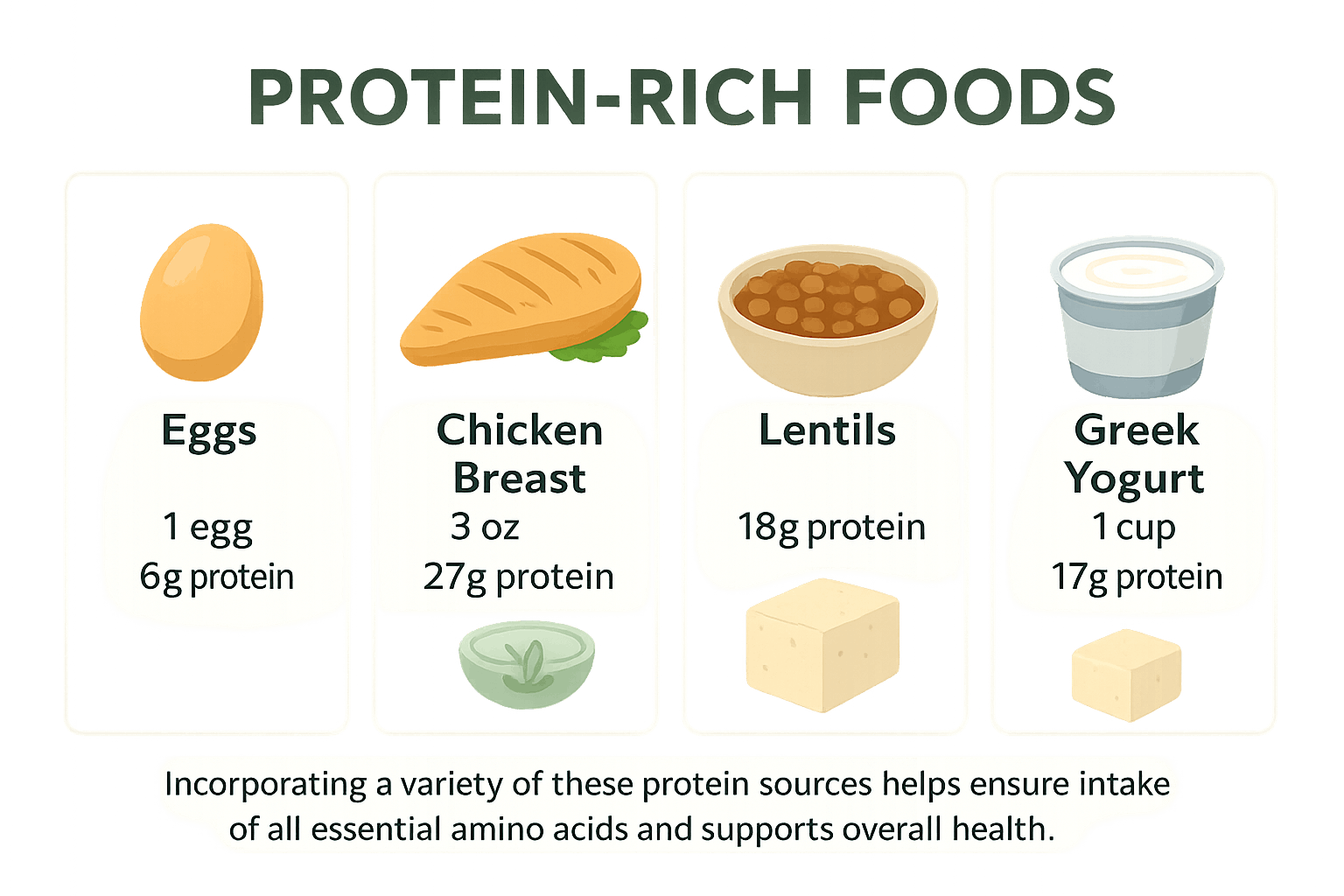
Common Protein-Rich Foods:
Eggs
Chicken breast
Lentils
Greek yogurt
Tofu
Here are some common protein-rich foods and their protein content per typical serving:
| Food | Serving Size | Grams Protein |
|---|---|---|
| Eggs | 1 egg | 6g |
| Chicken breast | 3 oz | 27g |
| Lentils | 1 cup cooked | 18g |
| Greek yogurt | 1 cup | 17g |
| Tofu | 1/2 cup | 10g |
| Incorporating a variety of these protein sources can help support intake of all essential amino acids and overall health. | ||
Practical Meals to Ensure Enough Protein
Animal-based protein sources include dairy products, eggs, fish, poultry, and red meat, while plant-based sources include beans, lentils, nuts, seeds, whole grains, and soy products.
Medically tailored meals from Peqish and other functional food providers offer balanced portions rich in protein and essential nutrients, ideal for individuals with specific dietary needs. Institutions can provide grab-and-go protein-rich options such as pre-packaged sandwiches can be useful for supporting muscle maintenance and managing calorie intake. Portion control and convenient ready-to-eat meal options can make it easier to meet protein targets without overeating.
Protein Supplements: When High-Protein Powders Help
Protein powders, bars, and shakes can be useful when dietary protein is hard to get from food alone due to poor appetite, busy lifestyles, increased needs from training or certain clinical conditions. Choose products that provide a high-quality protein source and are lower in added sugars, excess calories, and saturated fat. Use supplements cautiously to avoid overreliance on processed high-protein foods and consult healthcare providers when necessary.
Special Populations Needing More Protein or to Ensure Enough Protein
As adults age, muscle mass naturally decreases (sarcopenia), and the body's ability to process protein can become less efficient (anabolic resistance). Older adults often benefit from higher protein intake: a practical target is about 1.0 to 1.2 g per kg of body weight per day for healthy older adults, and 1.2 to 1.5 g per kg per day if they are ill or at risk of malnutrition to help counter anabolic resistance and sarcopenia. (10)
Pregnant and breastfeeding individuals also need higher protein for fetal growth and milk production. People with kidney disease should get individualized advice and seek clinical guidance to tailor protein intake appropriately because protein needs can change depending on how advanced the condition is. (11)
Risks of Too Much Protein and How to Monitor Intake
Very high protein intake is mainly a concern for people with chronic kidney disease or a solitary kidney, who are generally advised to avoid sustained intakes above about 1.2 g per kilogram bodyweight per day and emphasize plant‑based sources (11).
In otherwise healthy adults, higher‑protein diets within the usual intake range have not been shown to cause clear kidney damage or major harm, though long‑term data at very high intakes (above 2-3+ gram per kilogram bodyweight per day) remain limited (12).
Because risk also depends on protein source-red and processed meats are more often linked with adverse kidney and cardiometabolic outcomes than plant proteins-periodic tracking and, when possible, input from a dietitian can help keep intake in a sensible range for most Americans (11,12).
Tools to Calculate Protein Intake and Track Daily Protein
Interactive protein calculators and downloadable charts can assist in determining personalized protein needs based on body weight, activity level, and health status. Peqish meal options can support people working toward their protein targets for healthy weight management and muscle gain or maintenance.
Key Takeaways
Daily protein needs vary based on age, activity level, and health status. Sedentary adults need about 0.8 grams per kilogram of body weight per day, while active individuals, athletes, and older adults often need more. (1-4)
Distributing protein evenly across the day can support muscle protein synthesis, and many adults benefit from ~20–40 grams of protein per meal adjusting for body size, age, and activity level. (3-5)
Complete proteins mostly come from animal foods like dairy, eggs, fish, and meat, while many plant proteins may need to be combined or varied to cover all essential amino acid. (8,9)
Very high protein intake is primarily a concern for people with chronic kidney disease; in otherwise healthy adults, higher‑protein diets have not been shown to cause clear kidney damage, though long‑term data are limited. (11,12)
Incorporating a variety of protein-rich whole foods, including plant-based sources, can help meet protein needs, and supplements can be useful when food intake is insufficient. (5,8,10)
Frequently Asked Questions
Is 100 g of protein too much?
It depends on your body weight, activity level, age, and health status. It may be appropriate for active adults, but more than needed for sedentary or smaller individuals.
how much protein should I have on tirzepatide?
Protein needs on tirzepatide vary, but many people benefit from a higher intake (1.2-1.6 grams per kilogram bodyweight per day) to help preserve muscle during weight loss. (13) A healthcare provider or dietitian can help set the right target.
What is the best protein for sarcopenia?
Complete protein sources such as eggs, dairy, lean meats, fish, and soy, along with well‑planned plant‑based combinations, can all support muscle maintenance in older adults. (3) For sarcopenia, leucine‑rich proteins (for example whey, dairy, eggs, soy) are especially effective when combined with regular resistance training. (5)
References
Wu G. Dietary protein intake and human health. Food Funct. 2016;7(3):1251–1265. PMID: 26797090.
Vitale K, Getzin A. Nutrition and Supplement Update for the Endurance Athlete: Review and Recommendations. Nutrients. 2019;11(6):1289. PMID: 31181616.
Harris S, DePalma J, Barkoukis H. Protein and Aging: Practicalities and Practice. Nutrients. 2025;17(15):2461. PMID: 40806046.
Institute of Medicine. Dietary reference intakes for energy, carbohydrate, fiber, fat, fatty acids, cholesterol, protein, and amino acids. J Am Diet Assoc. 2002;102(11):1621–1630. PMID: 12449285.
McCarthy D, Berg A. Weight Loss Strategies and the Risk of Skeletal Muscle Mass Loss. Nutrients. 2021;13(7):2473. PMID: 34371981.
Hector AJ, Phillips SM. Protein Recommendations for Weight Loss in Elite Athletes: A Focus on Body Composition and Performance. Int J Sport Nutr Exerc Metab. 2018;28(2):170–177. PMID: 29182451.
Villareal DT, Smith GI, Shah K, Mittendorfer B. Preserving Healthy Muscle during Weight Loss. Curr Opin Clin Nutr Metab Care. 2023;26(1):23–29. PMID: 36528134.
Berrazaga I, Micard V, Gueugneau M, Walrand S. The role of the anabolic properties of plant‑ versus animal‑based protein sources in supporting muscle mass maintenance: a critical review. Nutrients. 2019;11(8):1825. doi:10.3390/nu11081825.
Nichele S, Phillips SM, Boaventura BCB. Plant‑based food patterns to stimulate muscle protein synthesis and support muscle mass in humans: a narrative review. Appl Physiol Nutr Metab. 2022;47(7):700‑710. doi:10.1139/apnm‑2021‑0806.
Rondanelli M, Peroni G, Fossari F, Vecchio V, Gasparri C, Perna S, et al. Effectiveness of protein intake on the maintenance of muscle mass, strength, and function in older adults: a systematic review and meta‑analysis. Nutrients. 2022;14(1):52. doi:10.3390/nu14010052.
Ko GJ, Joshi S, Kalantar‑Zadeh K, Rhee CM. The effects of high‑protein diets on kidney health and longevity. J Am Soc Nephrol. 2020;31:1667–1679.
French SJ, Kanter M, Maki KC, Rust BM, Allison DB. The harms of high protein intake: conjectured, postulated, claimed, and presumed, but shown? Am J Clin Nutr. 2025;122:9–16.
Sainsbury A, et al. Nutritional priorities to support GLP 1 receptor agonist use in obesity management. Obes Rev. 2025;26(1):e13615. PMID: 40263649.
Disclaimer
The information provided in this article is for educational and informational purposes only and is not intended as medical advice. While we work diligently to provide accurate and up-to-date information, we make no representations or warranties of any kind, express or implied, about the completeness, accuracy, reliability, suitability, or availability with respect to the content. The information contained herein should not be used as a substitute for the advice of an appropriately qualified and licensed physician or other healthcare provider. The suggestions and insights should not be used for diagnosing or treating a health problem or disease, or prescribing any medication. Always seek the advice of your physician or other qualified health provider with any questions you may have regarding a medical condition or treatment and before undertaking a new health care regimen. Never disregard professional medical advice or delay in seeking it because of something you have read on this site.



Discover the remarkable world of quercetin, a powerful flavonoid antioxidant found abundantly in everyday colorful fruits, vegetables, and herbs. From the vibrant red onions and crisp apples to the tangy capers and antioxidant-rich berries, quercetin is nature’s secret weapon for supporting your health. This naturally occurring compound plays a crucial role in neutralizing harmful free radicals, promoting a healthy inflammatory response, and supporting cardiovascular and immune health.
Imagine enhancing your meals with foods that not only delight your taste buds but also provide therapeutic effects that could help maintain healthy blood pressure, support brain function, and potentially reduce the risk of chronic diseases. Quercetin-rich foods are more than just ingredients; they are allies in your journey toward wellness.
But did you know that how you prepare these foods can significantly impact their quercetin content? Cooking methods like boiling may reduce quercetin levels by up to 30%, while techniques such as steaming, roasting, or microwaving without water help preserve this valuable nutrient. Pairing quercetin-rich foods with healthy fats or vitamin C-packed ingredients can further enhance absorption, making your meals both delicious and nutritionally potent.
For those seeking an extra boost, quercetin supplements offer a convenient option, with recommended doses typically ranging from 500 to 1,000 mg per day. However, it is essential to be mindful of dosage and consult with healthcare professionals, especially since excessive intake might affect kidney health. The natural synergy of quercetin in whole foods often provides a safer, more balanced approach to harnessing its health benefits.
Whether you’re interested in supporting heart health, managing inflammation, or simply embracing a diet rich in antioxidants, understanding foods high in quercetin empowers you to make informed choices. This article dives deep into the top sources of quercetin, how to maximize its benefits through preparation, and the latest insights into its health effects.
Ready to unlock the potential of quercetin and transform your diet into a vibrant, health-enhancing experience? Explore the full guide to discover practical tips, delicious food ideas, and evidence-based knowledge that can help you thrive naturally. Your journey to better health starts here—let quercetin be part of your everyday wellness strategy.